2026 Best Packaging Gift Box Types for Global Buyers
Choosing the right Packaging Gift Box can shape how customers judge a product before opening it. For global buyers, the box must protect goods, support branding, and survive long distribution routes. A beautiful package is not enough. It may look premium on a showroom table, yet fail after humidity, stacking, or repeated handling.
This guide explores practical gift box types for international purchasing in 2026. It covers rigid boxes, folding cartons, magnetic closures, drawer-style designs, corrugated gift boxes, and sustainable fiber-based options. Each format serves a different purpose. A rigid box suits jewelry, cosmetics, and premium food sets. A folding carton reduces storage space and shipping volume. Corrugated structures offer stronger protection for heavier products. Small details matter, too, including paper thickness, insert design, closure strength, print consistency, and moisture resistance.
Based on packaging development and supplier evaluation experience, global buyers should compare samples before approving large orders. Check the box on a real product, not only in a digital presentation. Measure interior movement. Test the lid several times. Inspect color under natural light. These simple steps often reveal costly weaknesses. Sustainability also requires careful judgment. Recycled paper, water-based inks, and plastic-free inserts may improve environmental performance, but their quality and availability can vary by region. There is no perfect box. The best choice balances protection, appearance, cost, logistics, and responsible material selection. This overview helps buyers make that decision with clearer evidence and fewer assumptions.
Gift Box Basics: Purpose, Structure, and Global Market Requirements
A gift box does more than hold a product. It protects the item, shapes the unboxing experience, and communicates value before the lid opens.
In practical sourcing work, buyers often begin with three questions: What is the box for? What must it protect? Where will it travel?
Purpose guides every structural choice. A rigid box suits premium gifts and repeated handling, while a folding carton saves storage space and shipping weight.
A 20-by-15-centimeter box may need a paper insert, corner supports, or a fitted tray. These details prevent movement, scratches, and crushed edges. Magnetic closures look refined, but they can increase cost and complicate recycling. Sometimes, simpler works better.
Global buyers also examine material safety, labeling, packaging waste, and import documentation. Requirements differ by destination, so suppliers should verify current local rules before production.
Paper thickness, coating type, ink safety, and fiber sources deserve written records. A sample drop test and humidity check can reveal weaknesses that photographs hide. I once approved a beautiful prototype too quickly; its lid warped after storage in a damp warehouse. That mistake was avoidable.
Reliable development includes a clear specification sheet, approved samples, tolerance limits, and inspection photos. It also needs honest communication about recycled content and disposal instructions.
Claims should match test results, not marketing language. Gift boxes are emotional products, but their structure must remain measurable.
How to Classify Gift Boxes by Material, Shape, and Opening Style
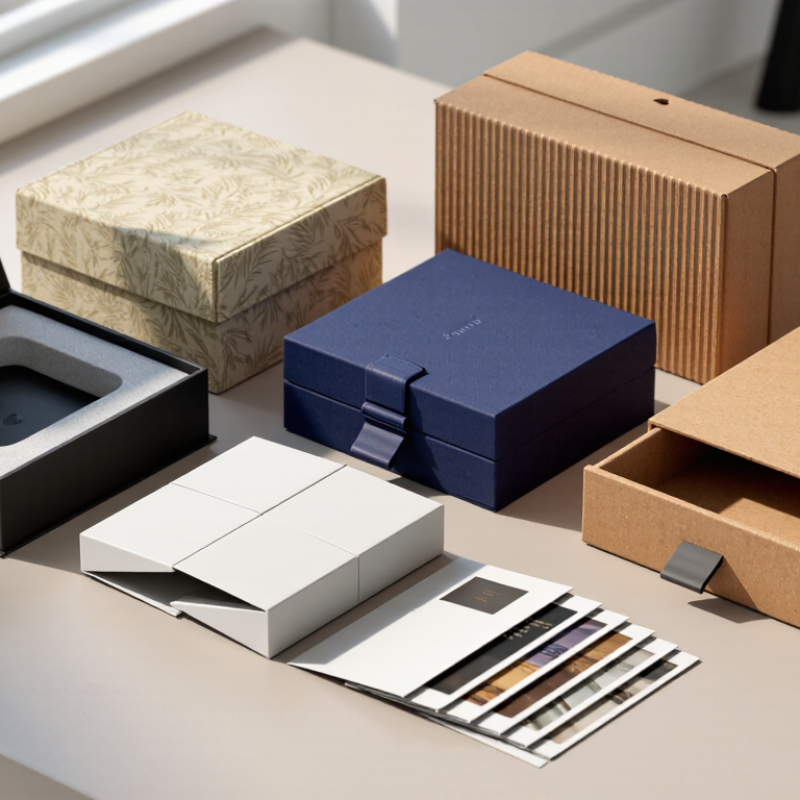
Gift boxes are easier to source when buyers classify them by material, shape, and opening style. Material affects cost, strength, printing, and recycling performance. Rigid paperboard offers a premium feel and protects delicate products. Folding carton uses less storage space and usually supports higher-volume orders. Corrugated board suits heavier items or longer shipping routes. Wood and fabric create a different experience, but they add weight and supply complexity.
Shape should follow the product, not only visual trends. Square boxes stack efficiently, while rectangular boxes fit bottles, books, and boxed sets. Cylindrical packaging creates strong shelf impact but may waste warehouse space. A magnetic-close box feels refined and opens smoothly. A lift-off lid gives a traditional unboxing experience. Drawer-style boxes protect the contents and encourage reuse. Hinged lids work well for repeated access. Small detail, big effect.
The U.S. Environmental Protection Agency reported an 80.9% recycling rate for paper and paperboard containers and packaging in 2022. This is a useful benchmark, not a universal global result. McKinsey’s 2020 global consumer research found that 60–70% of respondents would pay more for sustainable packaging in some categories. However, buyers should verify local recycling systems and material claims. Paper is not automatically low-impact. Coatings, magnets, foams, and mixed materials can complicate recovery. I have seen attractive boxes fail because the opening style slowed packing lines. Cost models should include assembly time, shipping volume, damage rates, and end-of-life handling. According to Smithers’ sustainable packaging research, market growth is strongly tied to recyclable and fiber-based formats, but performance still matters. That balance is easy to underestimate.
| Gift Box Type | Primary Material | Typical Shape | Opening Style | Common Product Applications | Key Advantages | Main Limitations | Recycling and Sustainability Considerations | Typical Buyer Priority |
|---|---|---|---|---|---|---|---|---|
| Folding Carton Gift Box | Paperboard, commonly 250–500 gsm | Rectangular, square, or custom die-cut | Reverse tuck, straight tuck, or auto-lock | Cosmetics, confectionery, small accessories, stationery, and promotional gifts | Lightweight, flat-packed, cost-efficient, and suitable for high-volume production | Lower rigidity and protection than rigid boxes; may deform under heavy loads | Usually easy to recycle when made from uncoated or fiber-based board; plastic laminates and metallic films may reduce recyclability | Low shipping costHigh volume |
| Rigid Setup Box | Greyboard or chipboard wrapped with coated paper, fabric, or specialty paper | Square, rectangular, or book-shaped | Separate lift-off lid, hinged lid, or shoulder-neck opening | Premium cosmetics, jewelry, electronics accessories, gourmet gifts, and luxury retail items | High structural strength, premium appearance, and good product presentation | Higher material use, greater shipping volume, and usually a higher unit cost | Paper wrapping can be recyclable if free from difficult-to-separate plastic coatings, magnets, and metal parts | Premium presentationProtection |
| Magnetic Closure Box | Rigid board with paper wrap and concealed or visible magnets | Book-style rectangular or square | Front-flap magnetic closure | Gift sets, watches, beauty products, spirits accessories, and corporate gifts | Convenient repeated opening, strong shelf appeal, and a premium unboxing experience | Magnets add cost and can complicate recycling or international transport handling | Separate magnets and mixed materials before recycling where local facilities require it | Luxury feelReusable packaging |
| Drawer or Sliding Box | Rigid board or heavy paperboard with a paper-wrapped sleeve | Rectangular, square, or long narrow format | Pull-out drawer, ribbon pull, or finger notch | Jewelry, tea, candles, chocolates, small electronics, and curated gift sets | Smooth opening action, good product organization, and a reusable inner compartment | Requires accurate tolerances; friction can increase in humid conditions | Primarily fiber-based and generally recyclable when decorative elements are limited | Unboxing experienceOrganization |
| Book-Style Box | Rigid board covered with printed paper, cloth, or synthetic wrap | Flat rectangular book format | Hinged cover with magnetic, ribbon, or elastic closure | Books, skincare sets, cultural gifts, premium stationery, and collector items | Large printable surface, strong branding area, and easy access to the contents | Hinges and closures can increase production complexity and material consumption | Paper-based construction is favorable for recycling; remove magnets, elastic, and non-paper inserts when possible | StorytellingSurface printing |
| Two-Piece Lid-and-Base Box | Rigid board, paperboard, or molded fiber | Square, rectangular, round, or hexagonal | Fully removable lid | Apparel accessories, confectionery, candles, jewelry, and general gift packaging | Simple construction, strong stacking performance, and broad size flexibility | Removing the lid requires more clearance than hinged designs; can be bulky when empty | Fiber-based versions are commonly recyclable; avoid permanently bonded plastic windows where possible | VersatilityStacking |
| Molded Pulp Gift Box | Recycled paper pulp, molded cellulose fiber, or agricultural-fiber pulp | Custom molded form, rectangular, oval, or compartmentalized | Snap-fit lid, hinged pulp lid, or separate lid | Egg-shaped gifts, cosmetics, bottles, electronics accessories, and eco-focused gift sets | Renewable fiber content, protective cushioning, and a natural tactile appearance | Surface detail and color range may be more limited than coated paper or plastic; moisture resistance may require treatment | Often recyclable or compostable depending on additives, coatings, inks, and local recycling systems | Plastic reductionProtective fit |
| Corrugated Mailer Gift Box | Single-wall or double-wall corrugated fiberboard | Rectangular, book-fold, or die-cut custom shape | Self-locking tuck, tear-strip, or crash-lock closure | E-commerce gift sets, subscription products, apparel, food products, and breakable items with inserts | Good protection-to-weight ratio, efficient shipping, and easy assembly without extra equipment | Less luxurious unless upgraded with printing, inserts, or specialty finishing | Widely recyclable when clean, dry, and free from excessive plastic lamination or mixed-material attachments | E-commerceTransit protection |
| Window Gift Box | Paperboard or rigid board with a PET or cellulose window | Rectangular, square, or pillow-style | Tuck-top, lift-off lid, or hinged lid | Bakery gifts, toys, handmade products, cosmetics, and food presentations | Displays the product without opening the package and supports retail merchandising | Window material can reduce recyclability and may provide less opacity for light-sensitive products | Cellulose windows can support fiber recycling more easily than some plastic windows, but local facility rules should be checked | Product visibilityRetail display |
| Pillow Box | Paperboard, kraft board, or laminated specialty paper | Curved pillow-shaped profile with tapered ends | Fold-over tuck flaps | Small jewelry, apparel accessories, wedding favors, sweets, and promotional items | Distinctive silhouette, low material weight, and quick assembly | Limited internal volume and lower compression strength for heavy products | Usually recyclable when made from paperboard without plastic lamination or non-paper decorations | Small giftsDistinctive shape |
| Tube Gift Box | Spiral-wound paperboard, kraft paper, and metal or paper end closures | Cylindrical, oval, or telescopic tube | Lift-off cap, friction-fit lid, or telescopic top and bottom | Tea, coffee, candles, bottles, posters, cosmetics, and specialty foods | Good round-product compatibility, strong visual differentiation, and useful stacking strength | Less space-efficient for palletization than rectangular boxes; end closures may be mixed materials | Paper tubes are recyclable when metal, plastic, foil, and other non-fiber components are removable | Specialty productsCylindrical items |
| Triangular or Hexagonal Box | Paperboard, rigid board, or corrugated fiberboard | Triangular, hexagonal, or other polygonal profile | Tuck-end, lift-off lid, or interlocking flap | Specialty confectionery, bottles, candles, seasonal gifts, and presentation packs | Strong visual differentiation and useful for products that benefit from a non-standard silhouette | More cutting waste and lower packing efficiency than standard rectangular formats | Fiber-based versions are generally recyclable; optimize the cutting layout to reduce production waste | Shelf differentiationSeasonal packaging |
| Wooden Gift Box | Thin plywood, solid wood, bamboo, or wood veneer | Rectangular, square, cylindrical, or custom carved form | Hinged lid, sliding lid, or removable lid | Wine accessories, tea sets, watches, keepsakes, gourmet foods, and long-term reusable gifts | High durability, natural appearance, and strong reuse potential | Heavier, more expensive to ship, and subject to moisture, treatment, and import requirements | Prefer untreated or responsibly sourced wood; check requirements for fumigation, heat treatment, and international wooden-packaging compliance | ReuseNatural material |
| Fabric or Paperboard-covered Gift Box | Rigid board core covered with cotton, linen, velvet, or specialty paper | Rectangular, square, round, or custom form | Lift-off lid, hinged lid, or magnetic flap | Jewelry, textiles, wedding gifts, keepsakes, and high-end presentation sets | Soft tactile effect, premium appearance, and extensive color and texture options | Mixed materials are harder to recycle; fabric surfaces may attract dust or show abrasion | Design for disassembly where possible; paper-only coverings are easier to recover than bonded textile composites | Tactile qualityPremium customization |
| Reusable Plastic Gift Box | PP, PET, acrylic, or other rigid plastics | Clear rectangular, square, cylindrical, or custom molded shape | Snap-fit, hinged, screw-top, or clip closure | Reusable organizers, cosmetics, toys, bath products, and products requiring moisture resistance | Moisture resistance, durability, product visibility, and repeated-use potential | Higher fossil-resource use and more challenging end-of-life management when multiple plastics or additives are used | Use a single clearly identified polymer where feasible; avoid unnecessary inserts and permanently bonded mixed materials | Moisture resistanceRepeated use |
| Transparent Acrylic Display Box | PMMA acrylic sheet or molded acrylic | Rectangular, cube, cylindrical, or custom display form | Lift-off lid, hinged lid, or magnetic closure | Collectibles, jewelry, cosmetics, ornaments, and display-oriented gifts | High transparency, rigid appearance, and strong visual focus on the product | Can scratch or crack; heavier and less recyclable through standard household systems than common paperboard | Design for long-term reuse and separate acrylic from metal hardware before specialist recycling where available | VisibilityDisplay value |
Key Gift Box Types for Retail, Corporate, and Seasonal Products
2026 Best Packaging Gift Box Types for Global Buyers
Retail products need strong shelf presence and efficient storage. Folding cartons suit cosmetics, snacks, and small accessories because they reduce shipping volume. Rigid setup boxes create a premium unboxing moment. They work well for jewelry, electronics, and higher-value gift sets. According to Smithers’ The Future of Global Packaging to 2029, the global packaging market is projected to approach 1.2 trillion dollars by 2028. That growth increases pressure on buyers to balance appearance, protection, and material efficiency.
Corporate gifts require controlled branding and dependable handling. Magnetic rigid boxes, drawer boxes, and two-piece boxes offer clean presentation for documents, awards, and curated gift collections. A paper sleeve can add messaging without redesigning the inner box. Small details matter. A 2023 McKinsey packaging study found that recyclability remains a major consumer concern, alongside product protection and convenience. Therefore, buyers should request recyclable paperboard, water-based inks, and clear material specifications. Claims need evidence.
Seasonal products need flexibility because demand can change quickly. Folding gift boxes support larger quantities and easier storage, while corrugated mailer boxes protect products during direct delivery. Inserts should hold items firmly, especially glass containers or irregular shapes. Seasonal runs need flexibility. Avoid excessive permanent decoration when artwork changes frequently. A rigid box may feel impressive, yet it can create higher storage and freight costs. I have seen attractive packaging become inefficient after one campaign. Sampling, compression testing, and trial packing reveal these weaknesses before production. The perfect gift box does not exist; the most suitable one depends on product value, sales channel, seasonality, and verified sustainability goals.
How to Match Gift Box Designs with Product, Brand, and Buyer Needs
2026 Best Packaging Gift Box Types for Global Buyers
Matching a gift box to the product starts with protection, not decoration. A glass item needs molded inserts, soft barriers, and enough clearance for transport movement. Lightweight products may suit folding cartons or rigid magnetic boxes. Keep it practical. A box that looks premium but arrives damaged has failed its buyer.
The design should also express the product’s value and brand character. Natural textures can support handmade goods, while clean lines may suit technical accessories. Use colors, finishes, and opening styles consistently across the packaging range. In packaging trials, I have found that a simple lift-off lid often feels more dependable than complex mechanisms. Buyers notice small details, such as ribbon tension, lid alignment, and whether the box closes quietly.
Buyer needs can vary by market, age group, budget, and gifting occasion. A compact box reduces storage pressure and may lower shipping costs. Clear product information helps buyers make confident decisions, especially when purchasing across borders. However, this is where design can become too cautious. Excessive labels, dark interiors, or tight inserts may reduce the unboxing pleasure. Test prototypes with real users, including people unfamiliar with the product. Their comments may challenge the original concept. That is useful. A strong 2026 gift box should protect the product, communicate its value, and remain convenient after the first opening.
Global Sourcing Factors: Sustainability, Compliance, Cost, and Shipping
2026 Best Packaging Gift Box Types for Global Buyers
Global buyers are comparing folding cartons, rigid boxes, and corrugated gift mailers. Each type serves a different shipping and presentation need. Folding cartons reduce storage space and often use less material. Rigid boxes create a premium feel but add weight, volume, and freight cost. Corrugated mailers protect products better during long-distance handling. Sustainability must be measured beyond appearance. Ask for recycled content data, material composition, and disposal guidance. A box labeled “green” proves little without documentation. Local recyclability also varies between markets.
Tips: Request a packaging sample before approving bulk production. Test drop resistance, moisture exposure, stacking strength, and closure security. Compare landed cost, not only factory price. Confirm dimensions after assembly, because a small change can increase shipping charges. Check inks, adhesives, labels, and inserts against destination-market requirements. Keep compliance files, test reports, and supplier declarations together. It saves time during inspections.
Cost control often requires compromise. A thinner board may reduce expense but weaken corners. A decorative finish may improve appearance but complicate recycling. Some buyers overlook humidity during ocean transport; that mistake can damage surfaces and printed details. Use protective inner structures only where testing shows a real need. Packaging suppliers should explain material choices, production limits, and quality checks clearly. Still, no test predicts every route perfectly. Recheck the design when the product, season, or destination changes.
2026 Best Packaging Gift Box Types for Global Buyers
Global sourcing benchmark: sustainability, compliance, cost efficiency, and shipping performance
Scores use a 1–5 procurement benchmark based on commonly used packaging characteristics: recycled-fiber potential, recyclability, material and production cost, dimensional efficiency, and readiness for international packaging requirements such as EU packaging-waste rules and ISPM 15 requirements for untreated solid-wood components. Actual performance varies by supplier, specification, coatings, printing, and destination market.